
Dog Ear Infection Symptoms That Shouldn’t Be Ignored
The dog ear infection symptoms that shouldn’t be ignored include frequent head shaking, scratching at the ears, a bad odor, dark discharge, redness or swelling inside the ear, and signs of pain when the ears are touched. More serious warning signs, such as a head tilt, loss of balance, or unusual eye movements, may mean the infection has reached the middle or inner ear and needs prompt veterinary attention. Ear infections rank among the most frequent reasons dogs visit the veterinarian, and they rarely clear up on their own. Left untreated, a simple outer ear infection can become chronic, painful, and much harder to resolve. At Brown Veterinary Hospital in Terre Haute, we see itchy, inflamed ears year-round, especially in dogs with allergies or floppy ears. Read on to learn how to recognize trouble early, what typically causes ear infections, and how veterinarians bring dogs relief.
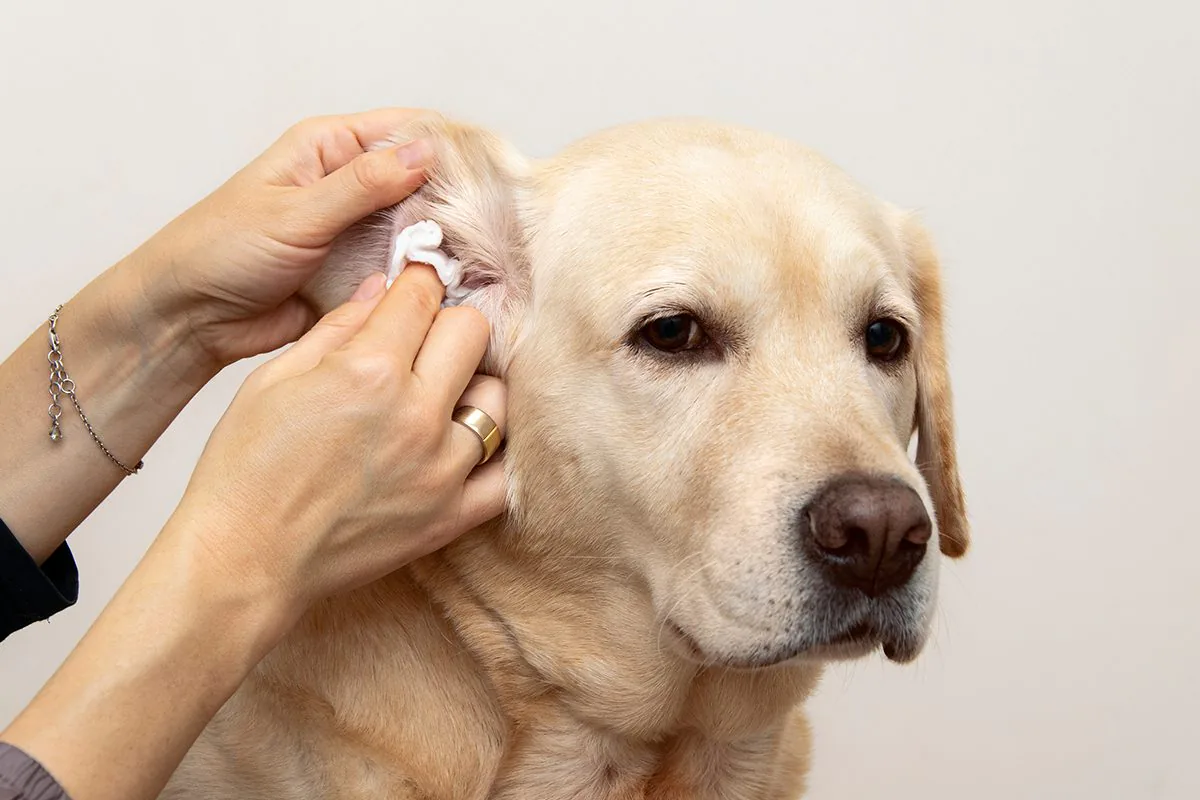
Signs of Ear Infection in Dogs
Most ear infections announce themselves through changes in your dog’s behavior long before you notice anything visible.
A dog’s ear canal is shaped like the letter L, dropping down vertically before turning toward the eardrum. That shape makes it easy for moisture, wax, and debris to become trapped, creating a warm environment where yeast and bacteria multiply. Because the deepest part of the canal is hidden from view, your dog’s actions are often the first clue that something is wrong.
Early dog ear infection symptoms to watch for include:
- Shaking the head repeatedly or holding one ear lower than the other
- Scratching or pawing at the ears or rubbing the head on the floor and furniture
- A sour, yeasty, or foul smell coming from the ear
- Brown, yellow, black, or bloody discharge
- Redness, warmth, or swelling of the ear flap or canal
- Crusty skin, scabs, or hair loss around the ear
- Whining, flinching, or pulling away when you touch the head
One Ear or Both?
Infections can affect a single ear or both at once. When both ears are involved, an underlying condition such as allergies is often to blame. A single affected ear may point to a foreign object, a polyp, or a localized problem your veterinarian will want to investigate.
Why Behavior Changes Matter
Ear pain can make dogs irritable, withdrawn, or reluctant to be petted. Some dogs stop eating hard food because chewing hurts. If your normally affectionate pet suddenly avoids having their head touched, ear discomfort is worth considering. Subtle dog ear infection symptoms like these are easy to mistake for a bad mood, so trust your instincts when something seems off.
Dog Ear Infection Symptoms That Shouldn’t Be Ignored: Red Flags
Certain symptoms suggest the infection is advanced, spreading deeper, or causing complications.
Most ear infections start in the outer ear canal, a condition called otitis externa. When infection travels past the eardrum into the middle ear (otitis media) or inner ear (otitis interna), it can affect your dog’s balance, hearing, and even facial nerves. These deeper infections are among the dog ear infection symptoms that shouldn’t be ignored for even a day or two.
Contact your veterinarian promptly if you notice:
- A persistent head tilt
- Stumbling, circling, falling over, or trouble standing
- Rapid side-to-side or up-and-down eye movements
- Drooping of the lip, eyelid, or one side of the face
- Sudden decrease in hearing or lack of response to sounds
- Vomiting or nausea alongside balance problems
- A soft, fluid-filled swelling on the ear flap
What Is an Aural Hematoma?
Vigorous head shaking can break small blood vessels in the ear flap, causing it to fill with blood and swell like a pillow. This condition, called an aural hematoma, is painful and usually requires veterinary treatment. It’s also a sign that the underlying ear problem needs attention.
When Ear Infections Keep Coming Back
Recurring infections are one of the dog ear infection symptoms that shouldn’t be ignored, even if each episode seems mild. Over time, repeated inflammation can thicken the ear canal and narrow the opening, trapping more debris and making infections harder to treat. In severe chronic cases, surgery may become the only way to provide lasting comfort.
What Causes Ear Infections in Dogs?
An ear infection is usually a symptom of a bigger issue rather than a stand-alone problem.
Yeast and bacteria are the organisms most often found in infected ears, but they typically take hold because something else has disrupted the ear’s normal defenses. Finding and managing that underlying trigger is the key to preventing repeat infections. Knowing these causes also helps you spot dog ear infection symptoms sooner, especially during allergy season or after a day at the lake.
Common contributing factors include:
- Allergies: Environmental and food allergies are the leading underlying cause of ear infections in dogs, as allergic inflammation changes the ear’s natural environment.
- Ear shape and breed: Dogs with heavy, floppy ears, such as Cocker Spaniels, Basset Hounds, Labrador Retrievers, and Golden Retrievers, trap more warmth and moisture.
- Moisture: Frequent swimming or bathing can leave water in the canal.
- Ear mites: These tiny parasites are especially common in puppies and cause intense itching with dark, crumbly debris.
- Foreign objects: Grass seeds and plant awns can work their way deep into the canal during outdoor play.
- Hormonal conditions: Hypothyroidism and other endocrine disorders can make dogs more prone to skin and ear infections.
Why Home Remedies Can Cause Harm
Online remedies often recommend pouring vinegar, hydrogen peroxide, or oils into a dog’s ears. If the eardrum is damaged, these substances can cause pain, further injury, or even hearing loss. Only a veterinarian can examine the eardrum and determine which products are safe to use. Home remedies can also mask dog ear infection symptoms that shouldn’t be ignored, delaying the diagnosis your dog needs.
How Do Veterinarians Diagnose and Treat Ear Infections?
An accurate diagnosis helps your veterinarian choose the treatment that will clear the infection the first time.
The Ear Exam and Cytology
Your veterinarian will look deep into each ear with an otoscope to check the canal and confirm whether the eardrum is intact. Next, a sample of debris is examined under a microscope, a test called ear cytology. This quick test reveals whether yeast, bacteria, mites, or a combination are present, and it guides the choice of medication. For stubborn or recurrent infections, a bacterial culture can identify which antibiotics will work best. Sharing details about when you first noticed dog ear infection symptoms, how often they’ve occurred, and any products you’ve used helps the veterinarian put together the full picture.
Treatment Options
Depending on the findings, treatment may include a professional ear cleaning in the clinic, medicated ear drops or long-acting gels applied by the veterinary team, oral medications, and anti-inflammatory therapy to reduce swelling and pain. Painful or severely inflamed ears may require sedation so they can be examined and cleaned thoroughly. Middle ear infections often need longer courses of treatment and, in some cases, advanced imaging.
Follow-Up Visits Matter
An ear can look and smell better before the infection is fully gone. Recheck appointments allow your veterinarian to confirm the infection has cleared, preventing a partially treated infection from returning stronger. Your veterinarian may also recommend allergy management or other steps to address the root cause. For dogs with frequent flare-ups, the team at Brown Veterinary Hospital can create a long-term ear care plan and show you how to monitor for early dog ear infection symptoms between visits.
Relief for Itchy, Painful Ears at Brown Veterinary Hospital
Ear infections can make even the happiest dog miserable, but most respond well to prompt, appropriate care. Recognizing dog ear infection symptoms that shouldn’t be ignored, from constant head shaking to a sudden loss of balance, gives your pet the best chance at a quick and complete recovery. At Brown Veterinary Hospital in Terre Haute, IN, our team performs thorough ear exams, in-clinic cytology, professional ear cleanings, and targeted treatment plans for both new and recurring infections. We also help identify the allergies, anatomy, or other factors that keep ear problems coming back, so your dog can stay comfortable long term. If your dog is scratching, shaking, or showing any of the warning signs above, call us at (812) 645-0715 to schedule an ear exam with our team.
Recent Posts

About Brown Veterinary Hospital
We are here to serve as your partner in keeping your four-legged family member healthy, ensuring you have all the tools you need to provide them with a lifetime of outstanding care. Our animal hospital in Terre Haute offers a full range of services to nurture and extend your pet’s life, from wellness and preventative care to critical care, exotic pet care, and dermatology.