
Why Is My Cat Peeing Outside the Litter Box?
Cats usually pee outside the litter box because of a medical problem, stress, or something about the box itself that they dislike. Urinary tract issues, kidney disease, and arthritis are common physical causes, while a dirty box, a new pet, or a change in routine can trigger the behavior too. If you have been wondering, “Why is my cat peeing outside the litter box?” you are far from alone. Inappropriate urination is one of the most frequent concerns cat owners bring to their veterinarian, and it is also a leading reason cats lose their homes. The good news is that most cases have an identifiable cause and a workable solution. At Brown Veterinary Hospital in Terre Haute, IN, we help families sort out these puzzles every week. Below, we explain the warning signs that need urgent care, the health conditions and household factors behind the problem, and what to expect when you bring your cat in for an evaluation.
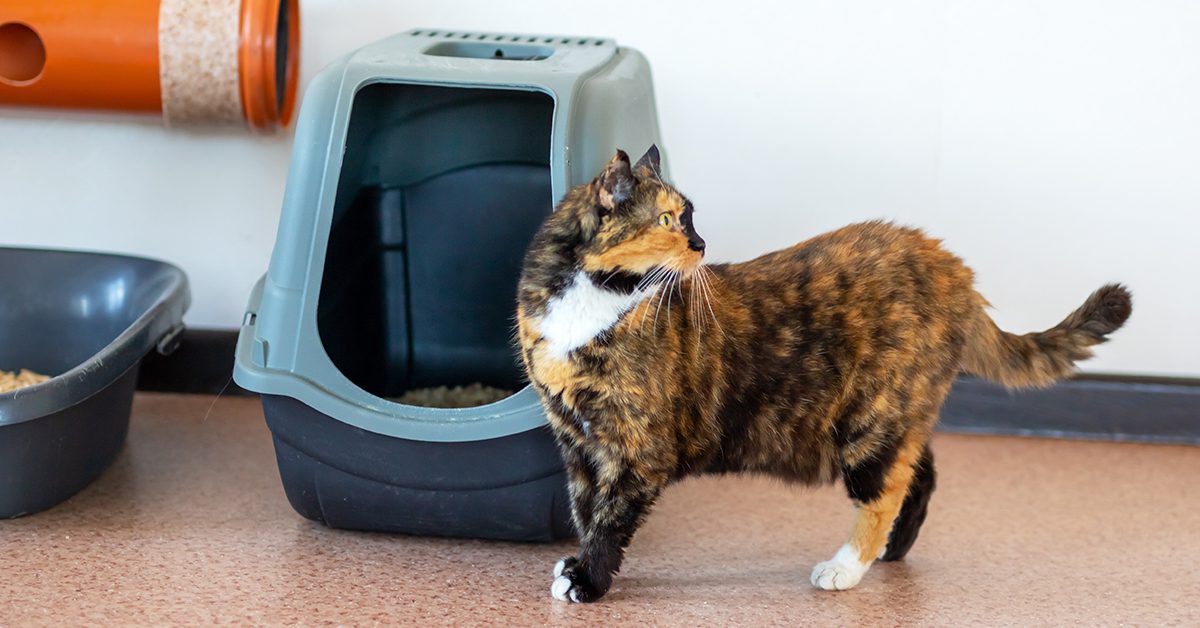
My Cat Keeps Peeing Outside the Litter Box: When Is It an Emergency?
Most litter box problems are not emergencies, but one situation demands immediate attention. A cat who strains in the box and produces little or no urine may have a urethral blockage, a life-threatening condition that is most common in male cats.
Red Flags That Need Same-Day Care
When urine cannot leave the body, toxins and potassium build up in the bloodstream within hours. Without prompt veterinary treatment, a blocked cat can become critically ill in as little as a day or two. Contact your veterinarian or an emergency hospital right away if you notice:
- Repeated trips to the box with only drops of urine or none at all
- Crying, yowling, or vocalizing while trying to urinate
- Constant licking of the genital area
- Vomiting, hiding, or sudden lethargy alongside urinary changes
- A tense or painful belly when touched
Peeing vs. Spraying
It also helps to figure out what kind of accident you are seeing. Urinating usually leaves a puddle on a flat surface such as a rug, bed, or pile of laundry. Spraying, on the other hand, involves a cat backing up to a vertical surface like a wall or door and releasing a small amount of urine, often with a quivering tail. Spraying is primarily a territorial or communication behavior, while puddling more often points to medical discomfort or a litter box issue. Unneutered males spray most often, but spayed and neutered cats of either sex can spray as well, especially when they feel threatened by another cat. Sharing which pattern you have noticed, along with where and how often it happens, gives your veterinarian a valuable head start. A quick phone photo of the spot can help, too.
Which Health Problems Cause Cats to Urinate in the Wrong Places?
A physical cause should always be ruled out first, because a cat who associates the litter box with pain will often start looking for somewhere else to go. Even after the medical issue clears up, that negative association can linger.
Common Medical Culprits
Several conditions can make urinating uncomfortable, urgent, or more frequent:
- Feline idiopathic cystitis (FIC): bladder inflammation without a clear infection, closely linked to stress
- Urinary tract infections: more common in older cats and those with other health conditions
- Bladder stones or crystals: mineral deposits that irritate the bladder lining
- Kidney disease, diabetes, and hyperthyroidism: each can increase thirst and urine volume, so the box fills faster
- Arthritis: stiff joints make climbing into a high-sided box or reaching an upstairs bathroom difficult
- Cognitive decline: senior cats may become disoriented and forget where the box is
Why Age Matters
Young and middle-aged cats are more likely to have cystitis or stones, while senior cats more often face kidney disease, diabetes, thyroid problems, or joint pain. That is why your veterinarian will consider your cat’s age, weight, and history when deciding which tests make the most sense. Changes in thirst, appetite, or body weight are worth mentioning too, since they can point toward a specific diagnosis. Keep in mind that cats are skilled at masking discomfort, so a litter box change may be the only obvious sign that something deeper is going on. Treating the underlying condition often resolves the accidents entirely, which is why a medical workup comes before any behavior plan.
Could the Litter Box or Household Stress Be the Problem?
Once health problems are ruled out, the next step is to look closely at the box and the environment around it. Cats have strong preferences, and small details that seem minor to us can feel like deal-breakers to them.
Litter Box Preferences
Many cats refuse a box that is not scooped often enough, sits in a noisy laundry room, or is tucked into a corner where another pet can ambush them. Covered boxes trap odors that people cannot smell but cats certainly can. A sudden switch to a new litter texture or a heavily scented brand can also send a cat looking for alternatives. Size matters as well, since many commercial boxes are too small for an adult cat to turn around comfortably. A widely used guideline is to provide one box per cat plus one extra, spread across different areas of the home rather than lined up side by side.
Stress and Changes at Home
Cats thrive on routine, and disruptions can show up as accidents. Moving to a new house, welcoming a baby, adopting another pet, rearranging furniture, or even a family member’s new work schedule can trigger anxiety. Tension between cats in a multi-cat home is a particularly common factor, because one cat may quietly guard the litter box or block a hallway. Outdoor cats visible through a window can also prompt marking near doors and windows. Stress does more than change behavior. It also plays a direct role in feline idiopathic cystitis, which links the emotional and physical sides of this problem more closely than many owners realize. Thoroughly cleaning soiled areas helps, since lingering scent can draw a cat back to the same spot.
How Does a Veterinarian Find the Cause?
Answering the question of why your cat is urinating outside the box starts with a detailed history and a hands-on exam. Your veterinarian will ask when the problem began, where the accidents happen, what the urine looks like, and whether anything at home has changed recently.
Common Diagnostic Steps
Depending on what the exam reveals, your veterinary team may recommend a urinalysis to check for infection, crystals, blood, and urine concentration. A urine culture can confirm a bacterial infection and identify the right medication. Bloodwork screens for kidney disease, diabetes, and thyroid disease. X-rays or an ultrasound can reveal bladder stones or other structural problems that a physical exam cannot detect. For cats with joint stiffness, your veterinarian may assess mobility and discuss pain management options.
Building a Plan That Fits Your Cat
When test results come back normal, your veterinarian can help you evaluate behavioral and environmental factors in more depth. The plan may involve medical treatment, a prescription diet, changes to the litter box setup, ways to reduce stress, or a combination of these. Some cats respond within days, while others need several weeks of consistent adjustments. Follow-up visits allow your veterinary team to track progress and fine-tune recommendations along the way. Patience pays off, because punishing a cat for accidents tends to increase anxiety and make the behavior worse. Working through the problem with a professional gives you the clearest path back to a clean, comfortable home, and it gives your cat relief from whatever was causing the trouble in the first place.
Get Answers About Litter Box Problems at Brown Veterinary Hospital
If you have been asking yourself why your cat is peeing outside the litter box, the sooner you get answers, the easier the problem is to solve. Long-standing habits become harder to break, and untreated medical conditions can progress quietly. The team at Brown Veterinary Hospital offers thorough exams, in-house diagnostics, and practical guidance for cat owners throughout Terre Haute and the Wabash Valley. We take the time to listen to your concerns, look at the full picture, and create a plan that works for your cat and your household. Whether your cat is a young adult with a sudden change in habits or a senior who is slowing down, we are here to help you find the reason behind it. Remember that straining with little or no urine is an emergency that needs immediate care. For all other litter box concerns, call us at (812) 645-0715 to schedule an appointment and help your cat feel like themselves again.
Recent Posts


About Brown Veterinary Hospital
We are here to serve as your partner in keeping your four-legged family member healthy, ensuring you have all the tools you need to provide them with a lifetime of outstanding care. Our animal hospital in Terre Haute offers a full range of services to nurture and extend your pet’s life, from wellness and preventative care to critical care, exotic pet care, and dermatology.